
Introduction
In food processing industries, one small mistake in selecting a conveyor belt can lead to serious problems — contamination, product rejection, and even compliance failure. Many businesses still use standard belts without checking whether they are safe for food contact.
The truth is, choosing the right Food Grade Conveyor Belt is not just about moving products. It directly affects hygiene, safety, and overall production efficiency. If you are planning to upgrade or install a new conveyor system, this guide will help you make the right decision based on real industry requirements.
What is a Food Grade Conveyor Belt?
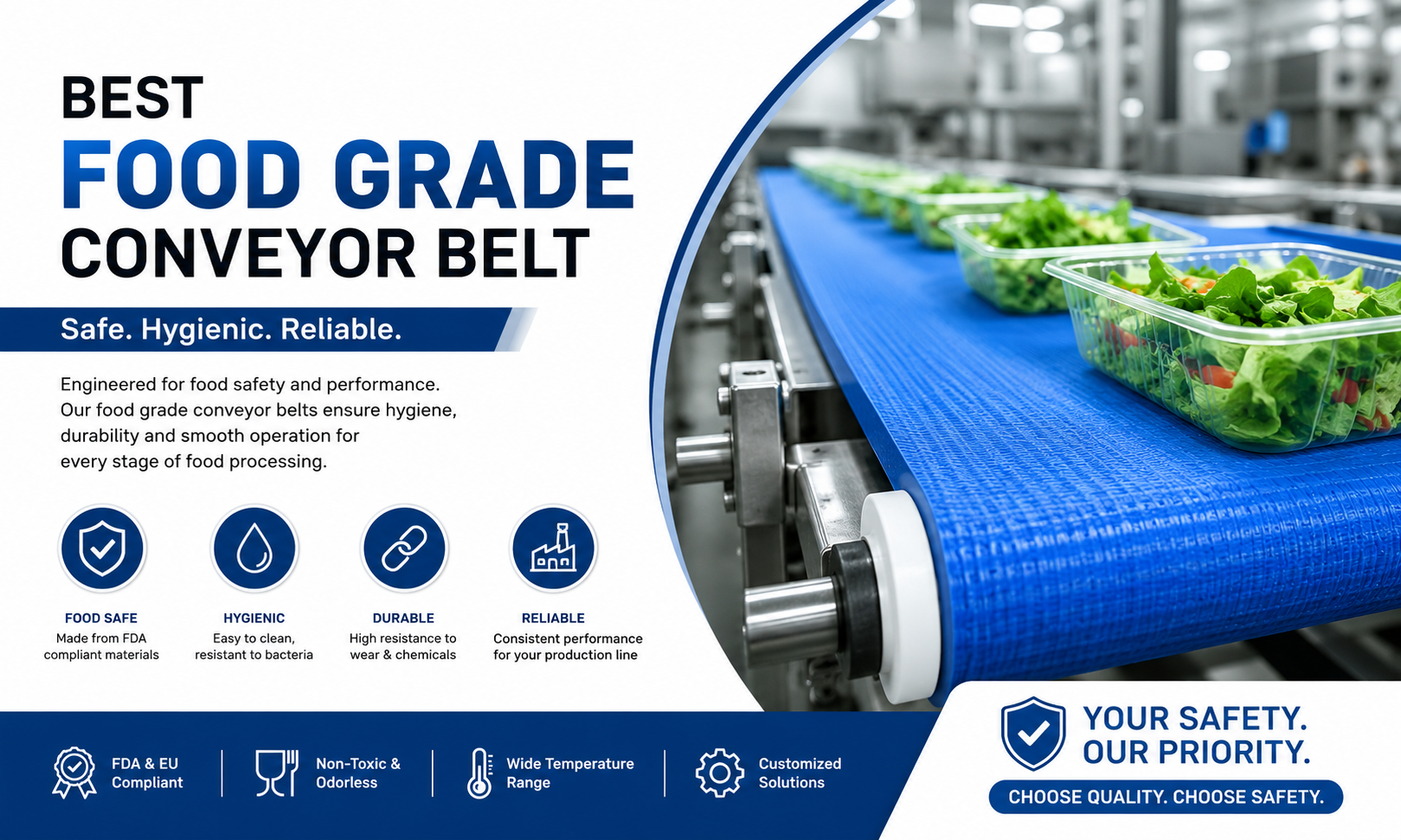
A Food Grade Conveyor Belt is specially designed for handling food products safely without contamination. These belts are made from non-toxic conveyor belt materials that do not react with food or release harmful chemicals.
Unlike standard belts, a Hygienic Conveyor Belt is easy to clean, resistant to moisture, and designed to meet strict food safety standards. Many industries also prefer FDA Approved Conveyor Belt options to ensure compliance with safety regulations.
Why Choosing the Right Conveyor Belt Matters
Selecting the wrong belt can create multiple problems:
- Risk of contamination
- Frequent belt damage
- Increased maintenance cost
- Failure to meet food safety standards
Using a proper Food packaging conveyor belt ensures safe product handling, better hygiene, and smooth operations. It also reduces downtime and improves long-term efficiency.
Types of Food Grade Conveyor Belts
Different industries require different belt types based on application:
1. PU (Polyurethane) Belts
Best for food processing due to high hygiene and flexibility.
2. PVC Belts
Commonly used in packaging and lightweight applications.
3. Rubber Belts
Used in specific conditions where durability is required.
Choosing the best food grade conveyor belt for food industry depends on your production environment and product type.
Key Factors to Choose the Right Food Grade Conveyor Belt
Before selecting a belt, focus on these important factors:
✔ Material Safety
Always choose belts made from Oil Resistant Conveyor Belts to avoid contamination.
✔ Hygiene & Cleaning
A good Hygienic Conveyor Belt should be easy to clean and resistant to bacteria buildup.
✔ Anti-Bacterial Properties
Many industries now prefer Anti-bacterial conveyor belts to maintain higher hygiene standards.
✔ Temperature Resistance
Check whether the belt can handle heat, moisture, or cold storage conditions.
✔ Load Capacity
Ensure the belt can handle your production load without stretching or damage.
Common Mistakes to Avoid
Many businesses make these mistakes while selecting belts:
- Choosing low-cost belts over quality
- Ignoring hygiene requirements
- Not checking compliance standards
- Selecting the wrong material for the application
Working with an Affordable food grade conveyor belt supplier who understands industry requirements helps avoid these issues.
Industries That Need Food Grade Conveyor Belts
These belts are widely used in:
- Food processing units
- Dairy industries
- Bakery and confectionery
- Meat and seafood processing
- Packaging industries
A reliable Food handling equipment supplier can guide you in selecting the right belt based on your industry.
How to Choose the Right Supplier
The performance of your conveyor belt also depends on the supplier you choose.
Look for:
- Manufacturing experience
- Quality control process
- Customization options
- Timely delivery
- Technical support
A good supplier will not just sell a product but will help you choose the right solution.
Conclusion
Choosing the right Hi Tech Belts is essential for maintaining hygiene, ensuring compliance, and improving operational efficiency. The right belt reduces contamination risk, lowers maintenance cost, and supports smooth production.
If you are planning to upgrade your system, focus on quality, safety, and application-based selection instead of just price. A well-chosen conveyor belt is a long-term investment in your production efficiency.
FAQs
1. What is a food grade conveyor belt?
A food grade conveyor belt is designed using non-toxic materials that are safe for handling food products.
2. Why is FDA approval important for conveyor belts?
An FDA Approved Conveyor Belt ensures that the belt meets safety standards for food contact.
3. Which material is best for food conveyor belts?
PU belts are widely considered the best due to hygiene and flexibility.
4. How do I choose the right food grade conveyor belt?
Check material safety, hygiene level, load capacity, and temperature resistance before selecting.